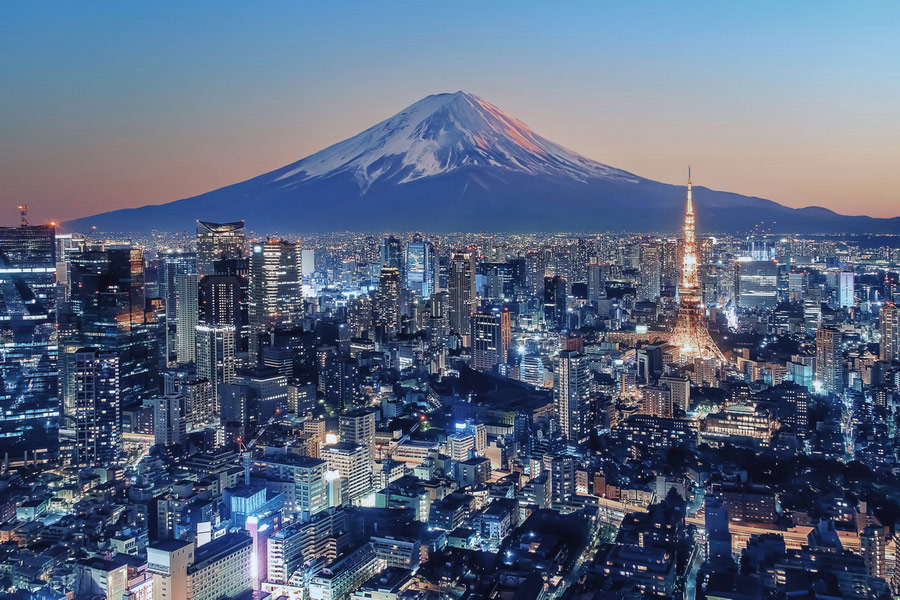
Investing in Luxury Real Estate in Tokyo: A 2026 Guide
Investing in Luxury Real Estate in Tokyo: A Strategic Overview
For the discerning international investor, Tokyo represents a rare sanctuary of stability, growth, and unparalleled quality of life. Investing in luxury real estate in Tokyo is no longer merely a diversification play; it is a strategic acquisition of assets in one of the world's most resilient and sophisticated urban economies. As global markets fluctuate, Tokyo remains a cornerstone for high-net-worth individuals seeking long-term capital preservation and steady yield potential. The Japanese capital has evolved into a global gateway, attracting record levels of international capital seeking the safety of a mature, rule-of-law-governed environment.
Why Tokyo Is One of the World's Safest Luxury Property Markets
Tokyo’s real estate market operates under a highly transparent legal framework that offers absolute property rights to foreign buyers. Unlike many major global cities—such as London, Singapore, or Hong Kong, which have complex foreign ownership regulations—there are no restrictions on foreigners purchasing land or buildings in Japan. You own the freehold of the land and the structure outright. This is a critical distinction that bolsters the value of investing in luxury real estate in Tokyo.
Japan’s building codes are world-renowned for their seismic resilience. Since the 1981 building code reform and the subsequent 2000 amendments, properties must be designed to withstand significant seismic events. This safety culture ensures that capital is protected from systemic infrastructure risk. Furthermore, the Japanese ethos of 'scrap and build' is rapidly being replaced by a culture of sophisticated property management, ensuring that trophy assets in the central wards retain and increase their value over decades. When evaluating an asset, the distinction between 'mansion' (condominium) and 'detached house' is essential; in the latter, the land value often represents 70-80% of the total price, providing a hedge against building depreciation.
The Prime Districts: Where to Invest
Minato-ku: The Epicenter of Elegance
Minato is the quintessential destination for investing in luxury real estate in Tokyo. Districts like Azabu-Juban, Roppongi, and Hiroo house the majority of foreign embassies, top-tier international schools like The American School in Japan (ASIJ) and British School in Tokyo, and a significant expatriate community. Shirokane, known as 'Shirokane-dama' (platinum town), offers a more subdued, high-status residential atmosphere. Prices in these prime Minato areas typically range from 3,500,000 to 7,000,000 JPY per square meter for high-end new builds. The proximity to Toranomon Hills and the ongoing redevelopment of the Roppongi 5-chome area keep demand at an all-time high.
Shibuya-ku: Modern Luxury and Lifestyle
Shibuya-ku is the heart of Tokyo’s creative and retail energy. Shoto is perhaps the most exclusive residential enclave in the city, offering large, low-density detached homes favored by captains of industry and celebrities. Here, land prices can exceed 5,000,000 JPY per square meter. In contrast, Daikanyama offers a boutique, European-style aesthetic, often called the 'Brooklyn of Tokyo.' It is highly walkable and attracts sophisticated buyers who value privacy and style. Ebisu, located nearby, provides a perfect balance of luxury apartment living and high-end dining, with net rental yields in this area remaining remarkably consistent for premium stock.
Chiyoda, Chuo, and Beyond
Chiyoda-ku contains the Imperial Palace and Japan’s central government buildings, making it the most exclusive address for corporate and institutional-grade luxury towers. Chuo-ku, specifically the Ginza and Nihonbashi neighborhoods, blends traditional high-end retail with the latest in ultra-luxury vertical living. Apartments overlooking the Sumida River or those with proximity to the Nihonbashi redevelopment zones often trade at significant premiums. Meanwhile, in Aoyama, the aesthetic is one of fashion, art, and refined residential design, catering to the international elite who require proximity to Omotesando’s luxury boutiques.
Property Types & Price Guide
Investing in luxury real estate in Tokyo requires an understanding of the product tiers. Luxury condominiums in prime central locations—often branded with world-class labels like Ritz-Carlton or Aman—generally start at 300 million JPY (approx. 2 million USD), with trophy penthouses frequently exceeding 3 billion JPY (approx. 20 million USD).
New-build towers provide high-tech security, 24-hour concierge, multilingual staff, and state-of-the-art seismic isolation (taishin/menshin) systems. Detached houses (kodate) offer a different value proposition: exclusive land ownership in prime pockets like Shoto or Meguro. While land values appreciate steadily, older structures depreciate according to tax law. Astute investors often look for 'land-value-heavy' assets that offer the opportunity to renovate or redevelop to modern luxury standards.
Investment Potential: Yields and Market Fundamentals
Net rental yields for luxury properties in Tokyo typically hover between 3% and 4.5%. While this may seem modest when compared to speculative emerging markets, it is remarkably stable and serves as a 'bond-like' yield with potential for capital appreciation. The combination of the relatively weak Japanese Yen and the Bank of Japan’s historical interest rate environment creates a favorable, if cautious, entry point for leveraging assets.
Urban redevelopment projects are the primary driver of capital appreciation. For example, the transformation of the Toranomon area into a global business hub has pushed local property values up by over 30% in the last five years. Investing in luxury real estate in Tokyo should be viewed through a 10-to-20-year lens, leveraging the scarcity of land in central wards where new construction is strictly regulated and highly contested.
Taxes, Fees and Ownership Costs
When calculating the ROI for investing in luxury real estate in Tokyo, investors must account for acquisition-related costs, which typically total 6% to 8% of the purchase price. This includes the Real Estate Acquisition Tax (calculated at 3% of the assessed value), Registration Tax, and brokerage commissions (typically 3% + 60,000 JPY + consumption tax).
Annual holding costs are surprisingly reasonable. The Fixed Asset Tax and City Planning Tax are calculated on the assessed value (which is usually lower than the market value). Management fees and reserve funds for luxury buildings can range from 50,000 to 200,000 JPY per month depending on the level of services. It is also vital to consider the consumption tax on the building portion of a purchase, which is 10%. Professional tax structuring, particularly regarding inheritance tax which can be high in Japan, is a mandatory step for any international high-net-worth individual.
The Buying Process for Foreign Buyers
There are no legal barriers to foreign ownership. The process is standardized and transparent.
- Due Diligence: We perform a thorough investigation of the property, including the 'Important Matters Explanation' (Jusetsu), which details structural history and management health.
- Offer: Submit a formal offer, often including a deposit (1-5%).
- Sales and Purchase Agreement (SPA): Once terms are set, the SPA is signed. The balance is typically paid within 30-60 days.
- Settlement: A judicial scrivener (Shiho-shoshi) ensures that the title registration is transferred cleanly and without encumbrances.
For non-residents, financing is possible but requires a strong credit profile. Some banks (such as SMBC or specialty lenders like ORIX) offer loans to non-residents, typically at 50-60% LTV (Loan to Value), with interest rates between 1.5% and 2.5%.
Residency, Visas, and Practical Considerations
While buying property does not grant residency, it is a significant step toward it. For those intending to spend more time in Japan, the 'Business Manager' visa or the 'Highly Skilled Professional' visa provides a pathway to residency. Essential services, such as English-speaking property management, interior designers, and tax accountants, are readily available in districts like Minato and Shibuya.
One must also consider the 'Age of the Building.' Japanese tax law allows for depreciation over the useful life of the building (typically 47 years for reinforced concrete). For investors, purchasing a property nearing the end of this period may offer different tax-shielding benefits compared to a brand-new asset, but it requires a more robust understanding of the building’s condition and future maintenance needs.
Lifestyle & Amenities
Tokyo offers an unmatched quality of life. From Michelin-starred dining in Ginza to the serene green spaces of Yoyogi Park, the city provides a holistic living experience. The transportation network is the world's most efficient, with the Yamanote Line providing seamless connectivity across the central wards. Safety is second to none, making it an ideal base for families and global professionals. The cultural density—art museums in Roppongi, high-fashion boutiques in Aoyama, and the historic atmosphere of Nihonbashi—ensures that Tokyo remains a global cultural capital.
Risks and What to Watch
Investing in luxury real estate in Tokyo is not without risk. Investors should be mindful of the aging population, which affects demand in suburban or non-prime peripheral areas. Always prioritize properties within 10 minutes of a major train station. Liquidity is high in central wards (Minato, Shibuya, Chiyoda) but drops significantly in peripheral areas. Additionally, currency risk remains a factor; however, for those with a global portfolio, the JPY often acts as a safe haven during periods of international market volatility.
FAQ: Investing in Luxury Real Estate in Tokyo
Can foreigners buy land in Tokyo?
Yes, there are absolutely no restrictions on foreigners buying land, buildings, or entire residential complexes in Japan. You receive full title ownership.
What is the typical yield for luxury apartments?
Investors can expect net rental yields between 3% and 4.5%. This is considered 'safe' and is generally superior to the yields offered by Japanese government bonds or traditional savings accounts.
Do I need a visa to buy property?
No, you do not need a visa, residency, or even a local bank account to start the buying process. However, having a local bank account will facilitate future management payments.
How long does the transaction take?
Typically 4 to 8 weeks. This covers everything from the initial offer, the drafting of the Sales and Purchase Agreement, to the final handover of keys by the judicial scrivener.
Is there an inheritance tax in Japan?
Yes, Japan has an inheritance tax that applies to assets located in Japan. We strongly advise our clients to engage with international tax counsel to structure their ownership appropriately for estate planning purposes.
Why Choose The Address
At The Address, we provide bespoke, end-to-end advisory services for those investing in luxury real estate in Tokyo. Our deep market knowledge, local presence, and exclusive access to off-market listings ensure our clients secure the most prestigious assets—properties that often never reach the public market. Whether you are looking for a high-yield investment penthouse or a generational family estate in Shoto, our experts navigate the complexities of Japanese law and local culture to protect your interests.
Conclusion
Tokyo’s residential market is a sophisticated blend of tradition, innovation, and unwavering resilience. It provides a secure harbor for capital and a lifestyle of global renown. By investing in luxury real estate in Tokyo, you position your portfolio within one of the world's most stable and rewarding landscapes. The combination of land scarcity, high-end construction standards, and the city's role as a global economic powerhouse makes this the ideal time to act. Contact The Address today to begin your acquisition journey and secure your place in one of the world's most important cities.